



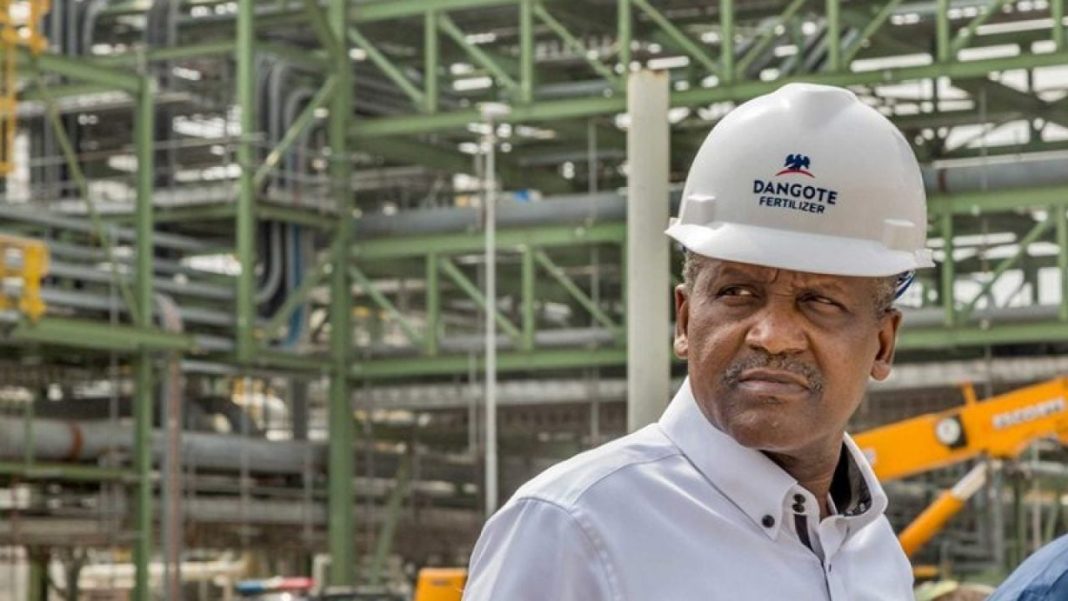
Aliko Dangote, Africa’s richest man and president of the Dangote Group, has cast serious doubt on the viability of Nigeria’s state-owned refineries, describing them as money pits that have swallowed billions of dollars with nothing to show.
Speaking in Lagos on Thursday during a visit by members of Global CEO Africa from the Lagos Business School, Dangote questioned whether the ageing refineries in Port Harcourt, Warri, and Kaduna—managed by the Nigerian National Petroleum Company Limited (NNPC)—would ever function again, despite receiving over $18 billion in funding.
“I don’t think, and I doubt very much, if those refineries will ever work,” Dangote said after a tour of his $20 billion, 650,000-barrel-per-day private refinery in Lekki. “It’s like trying to modernise a car built 40 years ago. Even if you change the engine, the body won’t take the shock of a new one.”
The Dangote Refinery, now Nigeria’s largest and most advanced, currently dedicates over half its output to petrol production—more than double what the state-owned plants once achieved.
Dangote’s remarks reignited criticism of the federal government’s management of the refineries, which have consumed vast sums for decades with minimal output. In 2007, his earlier attempt to privatise the facilities alongside then-President Olusegun Obasanjo was undone by Obasanjo’s successor, Umaru Musa Yar’Adua, who reversed the sale amid claims the assets were offloaded below value.
Dangote recalled: “We bought the refineries in January 2007, then had to return them. The MD of NNPC convinced Yar’Adua they could make them work. Yet today, they’ve spent $18 billion, and they’re still not working.”
His remarks echoed those of Obasanjo, who last year said the NNPC had long known it couldn’t manage the facilities. The former president said oil majors, including Shell, had turned down offers to take them over, citing inefficiency and corruption. He warned that Nigeria would be lucky to sell the plants for scrap in future.
“People who claimed they could run them knew they couldn’t,” Obasanjo said. “They just wanted to keep looting. In a civilised society, they should be in jail.”
Despite several claims by NNPC of successful “turnaround maintenance”, the Port Harcourt and Warri refineries were both shut down again within months of being declared operational in late 2024. Kaduna refinery, too, remains dormant.
The calls for privatisation have grown louder. The Manufacturers Association of Nigeria this week labelled the facilities an economic burden, while independent refiners urged the government to sell them off as scrap and divert the proceeds to support modular refinery development.
Figures from the last decade paint a grim picture. In 2021 alone, the government allocated over N100 billion to refinery rehabilitation, with a further $396 million spent on turnaround maintenance between 2013 and 2017. Yet none of the refineries are currently functioning.
Attempts to reach NNPC for comment proved unsuccessful. The corporation, which currently has no official spokesperson, did not respond to messages sent via the contact information on its website.
As Nigeria continues to grapple with soaring fuel prices, dependence on imports, and a struggling naira, Dangote’s remarks have amplified a growing consensus: the time has come to let go of a failed model and invest in a future built on private efficiency, not public waste.

