



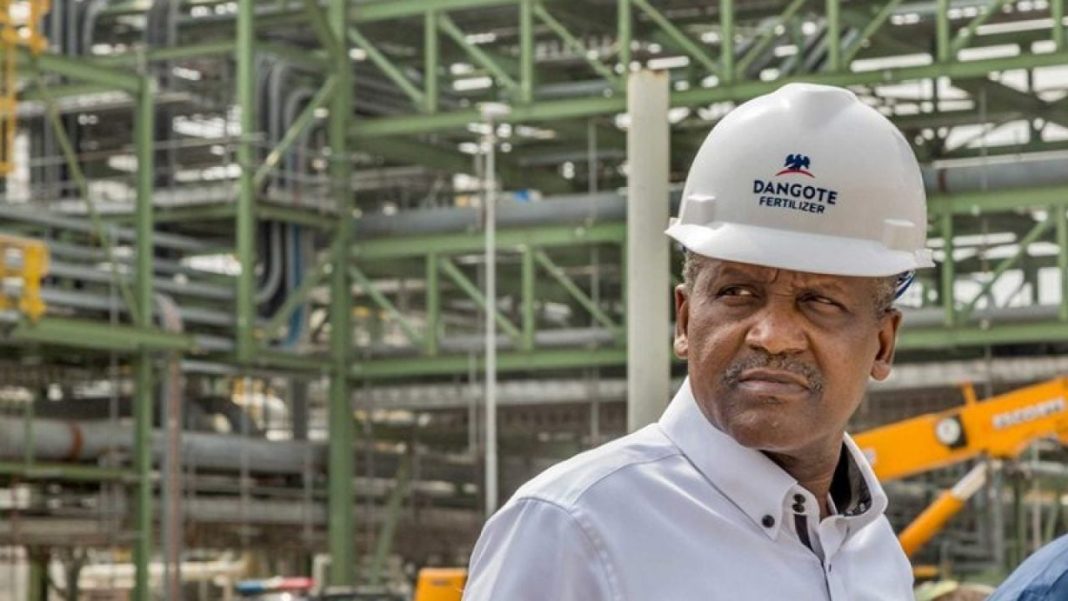
Dangote Petroleum Refinery has issued a pointed rebuttal to reports attributed to S&P Global, accusing the international energy information firm of publishing claims that distort the reality of Nigeria’s refining industry and misrepresent the refinery’s operations.
In a statement released on Monday, the company dismissed suggestions—circulated through newspaper advertisements on 9 February—that it was importing finished Premium Motor Spirit (PMS), commonly known as petrol, into Nigeria.
The refinery described the reports as inaccurate and misleading, insisting that it does not import finished PMS and that any imported materials are intermediate feedstocks and blending components used in standard refining processes.
According to the company, the issue was addressed at an S&P Global forum held in the United Kingdom on Monday, where Dangote officials said the misinformation was clarified and the forum subsequently acknowledged the refinery’s growing influence in global refining.
In its statement, Dangote Refinery said it was only sourcing alternative feedstocks to improve utilisation of its secondary units, a move it framed as a normal operational decision within the global refining industry.
The company went further, alleging that it had identified individuals responsible for “promoting the misleading narrative” and would disclose their names and motives in due course.
“This propaganda is being promoted by unpatriotic and unscrupulous individuals who cannot afford to see Nigeria stop imports—individuals who helped to milk the NNPC refineries through fraudulent financing transactions for refinery repairs, which ended up being squandered,” the statement said. “These individuals will soon have their day in court.”
Dangote Refinery said it operates as a merchant refinery in line with international best practice, importing only feedstocks such as high sulphur reformates, low-RON condensates and high sulphur cracked gasoline—materials that require further refining before they can meet regulated market specifications.
It argued that this practice is routine among advanced refineries in Europe and Asia, where operators regularly adjust crude slates and blending strategies to improve efficiency, flexibility and margins.
To label such intermediate imports as “fuel” or “gasoline”, the company said, was a technical misrepresentation that risks misleading the public and undermining confidence in Nigeria’s domestic refining ambitions.
“For the avoidance of doubt,” the company added, “the only gasoline supplied to the Nigerian market is our Euro 5 compliant PMS.”
It said every batch undergoes rigorous quality testing and insisted the refinery’s output ranks among the highest quality fuels available globally.
Since commencing operations, Dangote Refinery claimed it has helped improve fuel quality in Nigeria and reduce dependence on low-grade, high-sulphur petrol historically imported into West Africa.
The company urged S&P Global and other industry stakeholders to adopt greater accuracy and balance in reporting, warning that such publications carry significant influence in shaping global perceptions of Nigeria’s energy sector.
Dangote Petroleum Refinery reaffirmed its commitment to strengthening Nigeria’s energy security, environmental sustainability and broader economic transformation through what it described as world-class refining operations.

