



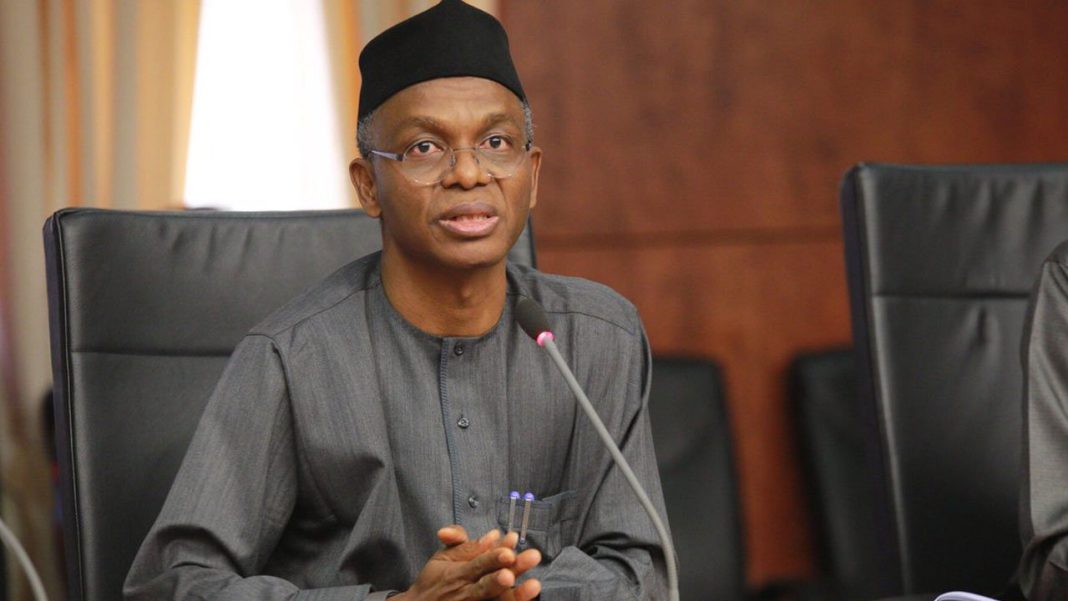
Nasir El-Rufai, the former governor of Kaduna State and one of Nigeria’s most outspoken political figures, was detained late on Monday at the Abuja headquarters of the Economic and Financial Crimes Commission (EFCC) after hours of interrogation over an alleged ₦432bn corruption probe.
Multiple sources within the anti-graft agency told local media that El-Rufai, now a leading figure in the African Democratic Congress (ADC), arrived at the EFCC’s Jabi office around 10am in response to an invitation and was questioned throughout the day. By nightfall, he was still being held in custody.
“He is still in our custody and wouldn’t be released today,” a senior EFCC source said, describing the case as part of an investigation that has reportedly been running for about a year.
The EFCC confirmed that El-Rufai honoured its invitation but declined to disclose further details. The agency’s spokesperson, Dele Oyewale, said only that the former governor had appeared as requested.
El-Rufai’s detention marks a sharp escalation in the legal and political storm surrounding the former minister of the federal capital territory, whose recent public attacks on the Tinubu administration and security agencies have fuelled rising tensions in Abuja.
At the centre of the EFCC’s inquiry is a 2024 report by the Kaduna State House of Assembly, which accused El-Rufai’s administration of misappropriating loans, bypassing due process in contract awards, and leaving the state with a ballooning debt burden.
Presenting the findings during plenary, the assembly’s ad hoc committee chairman, Henry Zacharia, alleged that many loans obtained between 2015 and 2023 were not used for the purposes for which they were secured. The speaker, Yusuf Dahiru Leman, claimed that roughly ₦423bn had been siphoned, recommending investigation and prosecution of El-Rufai and several former officials.
The report also cited disputed cash payments and contracts running into hundreds of millions of naira, including alleged diversion of ₦1.37bn earmarked for a light rail project and claims of money laundering involving senior aides.
El-Rufai has repeatedly denied wrongdoing, dismissing the probe as politically motivated and insisting that all borrowing during his tenure was lawfully appropriated and invested in infrastructure, education, healthcare and security interventions.
But Monday’s developments suggest Nigeria’s anti-corruption agencies may now be moving beyond preliminary review.
In a parallel legal front, the federal government has filed criminal charges against El-Rufai at the Federal High Court in Abuja over allegations that he unlawfully intercepted the phone communications of the national security adviser, Nuhu Ribadu.
The three-count charge, reportedly filed under the Cybercrimes (Prohibition, Prevention, etc) Amendment Act, 2024 and the Nigerian Communications Act, 2003, is linked to comments El-Rufai made during a televised interview on Arise TV on 13 February 2026.
In the interview, El-Rufai claimed he became aware of an alleged plan to arrest him after learning of a conversation from Ribadu’s phone.
“The government thinks that they are the only ones who listen to calls,” he said. “But we also have our ways.”
The remarks sent shockwaves through political and security circles, with analysts warning that if substantiated, the interception could amount to a grave breach of national security.
Presidential aides swiftly condemned the comments. Bayo Onanuga, special adviser to the president on information and strategy, accused El-Rufai of attempting to inflame political tension and distract from corruption allegations in Kaduna.
Meanwhile, the Department of State Services (DSS) has reportedly reopened investigations into the 2019 disappearance of Abubakar Idris, popularly known as Dadiyata, a Kaduna-based lecturer and government critic who has been missing for nearly seven years.
Security sources said the DSS had seized El-Rufai’s passport at Abuja’s Nnamdi Azikiwe international airport to prevent foreign travel and that investigators were also examining social media posts by his sons in connection with the case.
El-Rufai has denied involvement, insisting he did not know Dadiyata personally and had no reason to target him.
As the drama unfolded, rival protests erupted in Abuja and Kaduna. Demonstrators demanding El-Rufai’s prosecution gathered outside the EFCC headquarters with placards reading “El-Rufai not above the law”, while supporters staged a counter-protest insisting he was being politically targeted.
In Kaduna, civil society groups marched to the state house of assembly demanding an update on the legislative probe, as lawmakers reiterated their commitment to pursue accountability.
Adding further pressure, a coalition of terror victims in Kaduna issued a statement calling for investigations into alleged human rights abuses during El-Rufai’s tenure, including high-profile killings and disappearances.
The former governor, once regarded as one of Nigeria’s most influential northern powerbrokers, now faces a widening legal squeeze that could reshape both his political future and the fragile balance of alliances ahead of the next election cycle.

