



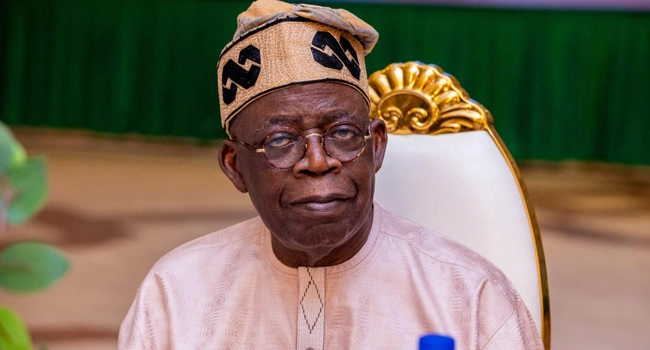
President Bola Tinubu has reached an agreement with labour leaders to increase the national minimum wage to N70,000. This decision, made during a meeting at the Aso Presidential Villa in Abuja, marks a substantial raise from the previous N30,000 minimum wage that expired on April 18, 2024.
The accord was struck last Thursday between President Tinubu and the leaders of the Nigeria Labour Congress (NLC) and the Trade Union Congress of Nigeria (TUC), Joe Ajaero and Festus Osifo. To formalize this agreement, an executive bill will be presented to the National Assembly on Tuesday, as confirmed by the President’s Special Adviser on Information and Strategy, Bayo Onanuga.
Addressing the labour leaders, President Tinubu emphasized his commitment to improving the lives of workers. “If you review my track record, I have never been found wanting to ameliorate the problems of workers. We are driving this economy together,” he stated. Tinubu also affirmed that no federal establishment worker should earn less than N70,000 and proposed a review of the minimum wage every three years.
The decision followed the submission of conflicting wage proposals by the Tripartite Committee on the New National Minimum Wage, which was established in January. The government and private sector suggested N62,000, while organized labour demanded N250,000. After consulting various stakeholders, President Tinubu opted for a compromise at N70,000.
In addition to the wage increase, the government has pledged to address several key issues. These include the payment of withheld salaries for university staff, investments in infrastructure and renewable energy, and the acquisition of more compressed natural gas (CNG) buses. The government also reiterated its commitment to local government autonomy.
Minister of Information and National Orientation, Mohammed Idris, hailed the agreement as a “happy day for Nigeria.” He noted the importance of continued dialogue and cooperation between the government and labour to ensure economic stability and development.
The President of the NLC, Joe Ajaero, acknowledged the economic challenges but expressed optimism about the periodic wage reviews. He stressed that the agreement would be taken back to union members for further discussion. Similarly, TUC President Festus Osifo welcomed the wage increase and the government’s commitment to address other pressing labour issues.
Reactions to the new minimum wage have been mixed. While the Organised Private Sector of Nigeria (OPSN) praised the President for resolving the protracted negotiations, the Peoples Democratic Party (PDP) criticized the amount as insufficient to meet workers’ needs. The Labour Party and New Nigeria People’s Party (NNPP) commended the agreement but urged the government to take more decisive actions to combat inflation and reduce living costs.
As Nigeria moves towards implementing the new minimum wage, the spotlight remains on the government’s ability to balance economic growth with the welfare of its workers. The forthcoming discussions in the National Assembly will be crucial in determining the success of this landmark agreement.

