



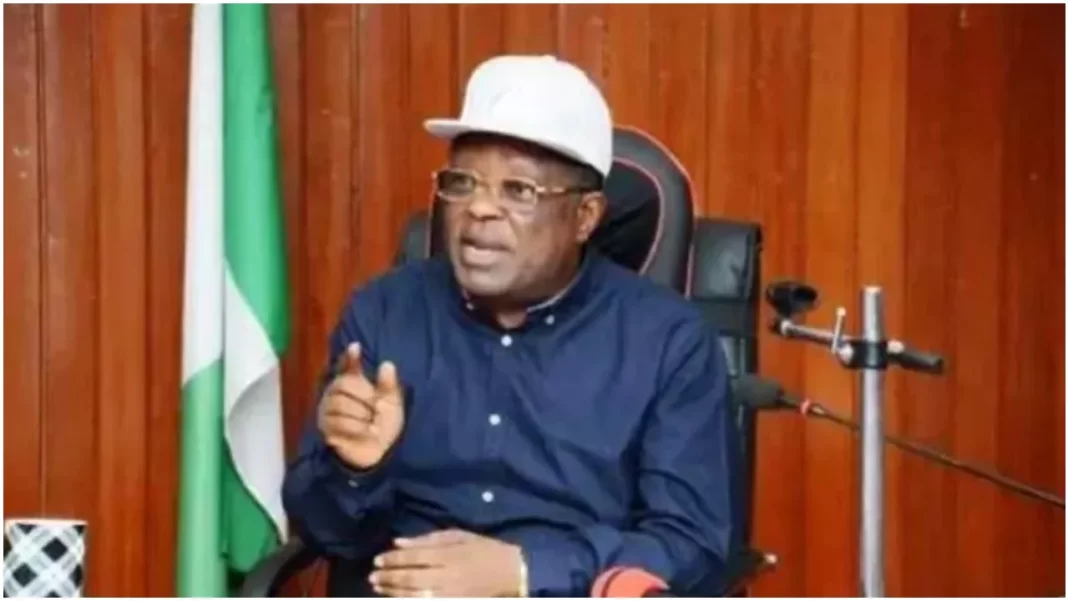
Nigeria’s Minister of Works, David Umahi, has announced a ₦18 billion allocation to compensate property owners affected by the Lagos-Calabar coastal highway project, with a commitment to ensure all listed beneficiaries receive payment within the next 10 days. Umahi’s statement came during a stakeholder engagement session focused on Sections 1 and 2 of the expansive Lagos-Calabar route, as he addressed ongoing challenges with infrastructure development and compensation.
Speaking on the legal constraints surrounding compensation, Umahi expressed frustration but affirmed that his ministry remains bound by law to comply fully. “This situation has been challenging, but legal obligations compel us to act,” he said. “The initial budget for this section was ₦8 billion, yet the figure has now risen to ₦18 billion. For transparency, we will publish all compensation details, from names and photos to property dimensions and costs.”
He also disclosed that several compensation-related cases are in court, with the ministry prepared to pursue these matters to the Supreme Court if necessary. Umahi directed the Federal Controller of Works in Lagos, Olukorede Keisha, to expedite payments, insisting on prioritising the rights of those affected.
Beyond compensation, the minister announced a sweeping review of projects delayed by contractors, including the termination of contracts for the Lokoja-Benin corridor and a reassignment of the Lagos-Ibadan highway’s second phase. “These delays have left people suffering from projects stagnant for over a decade,” Umahi remarked. “While some may call me ‘strict,’ I prefer that to seeing Nigerians wait endlessly for critical infrastructure.”
Turning to Nigeria’s aging bridges, Umahi revealed that ₦341 billion has been recommended to address urgent structural issues. He noted the severe degradation of bridges such as the Third Mainland Bridge, where saltwater exposure has corroded reinforcements and compromised structural integrity below the surface. “What appears sound on the surface can be gravely deteriorated below, and these neglected structures, some over 60 years old, are now in critical need of repair,” he said.
The ministry has enlisted international experts to assess the decay, particularly where chlorination and carbonation have worsened the condition of underwater supports. Further evaluations, conducted by Julius Berger with assistance from independent consultants, have also uncovered erosion from illegal sand mining and underwater currents, which have compromised piles across several bridges.
In a decisive move to ensure accountability, Umahi announced that contractors lacking necessary equipment will face contract revocations. “Some firms hold up to 20 projects without progress. Those found lacking will lose their contracts,” he declared, underscoring his resolve to meet President Bola Tinubu’s mandate for infrastructural efficiency and transparency.
Lastly, Umahi thanked the National Assembly for its interest in a 2025 budget retreat to streamline priority projects. “We’re listening, and we’re committed to real progress,” he said, signalling a new era of accountability in Nigeria’s long-delayed infrastructure projects.

